Running a commercial kitchen in New Brunswick comes with its fair share of responsibilities, and keeping your exhaust system clean isn’t just about appearances. It’s about safety, compliance, and protecting your business from devastating fire hazards. When grease accumulates in your kitchen hood and duct system, you’re essentially creating a ticking time bomb above your cooking stations.
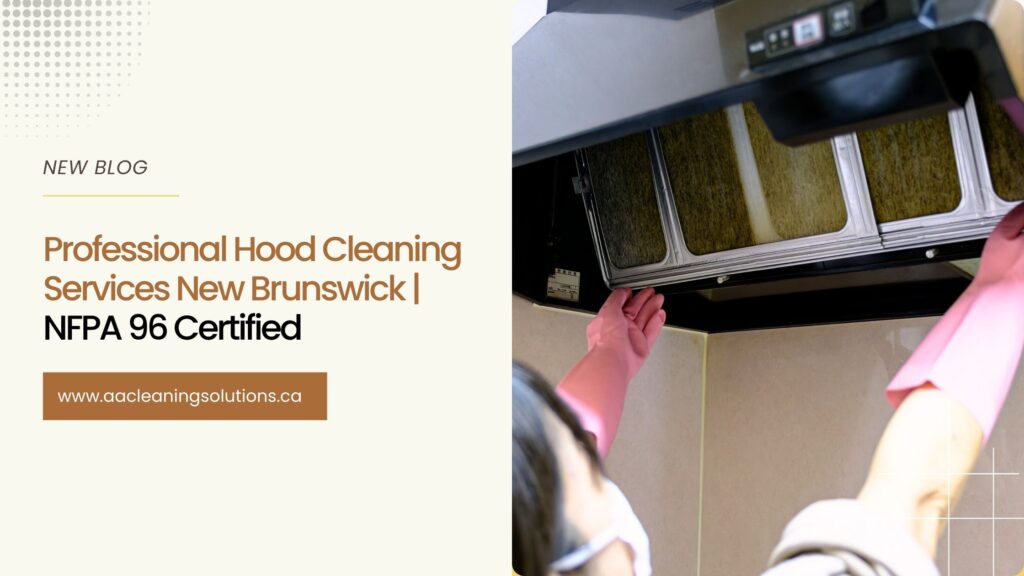
That’s where professional hood cleaning services come in. But not all hood cleaning companies are created equal. If you’re serious about protecting your restaurant, hotel, or food service facility, you need NFPA 96 certified hood cleaning that meets the strictest fire safety standards. In this guide, we’ll walk you through everything you need to know about commercial kitchen hood cleaning in New Brunswick and why certification matters.
What Is NFPA 96 Certification and Why Does It Matter?
NFPA 96 is the Standard for Ventilation Control and Fire Protection of Commercial Cooking Operations. Think of it as the gold standard for restaurant hood cleaning and fire prevention in commercial kitchens. This certification ensures that your hood cleaning service follows strict protocols designed to prevent grease fires, which are among the most common and destructive incidents in the food service industry.
When you hire an NFPA 96 certified company, you’re getting technicians who understand the science behind grease buildup removal and fire prevention cleaning. They know exactly how to access every part of your kitchen exhaust system, from the hood filters down to the ductwork and exhaust fans.
The Real Cost of Cutting Corners
Here’s something many restaurant owners don’t realize until it’s too late: your insurance company cares deeply about your hood cleaning frequency and documentation. If a fire occurs and you can’t prove you’ve maintained proper cleaning schedules with certified professionals, your claim could be denied. That’s not a risk worth taking when your entire business is on the line.
Understanding Commercial Kitchen Exhaust Cleaning
Your kitchen ventilation system does heavy lifting every single day. Whether you’re running a busy quick service restaurant or an upscale hotel kitchen, grease-laden vapors are constantly being pulled through your exhaust hood. Over time, this grease solidifies and creates layers of flammable material throughout your duct system.
What’s Included in Professional Hood Cleaning Services?
A comprehensive commercial hood cleaning service should cover:
- Hood filter cleaning – Removing and degreasing all baffle or mesh filters
- Grease hood cleaning – Scrubbing interior and exterior hood surfaces
- Duct system cleaning – Accessing and cleaning the entire exhaust ductwork
- Exhaust fan cleaning – Cleaning fan blades and housing
- Grease removal services – Eliminating accumulated grease from all components
- Fire suppression system inspection – Ensuring your fire protection equipment is accessible
The best hood cleaning service near me will use specialized equipment including pressure washers, degreasers, and access tools designed specifically for commercial kitchen sanitation. They’ll also provide detailed documentation showing before and after photos, along with certification stickers that prove compliance.
How Often Should Restaurant Hood Cleaning Happen?
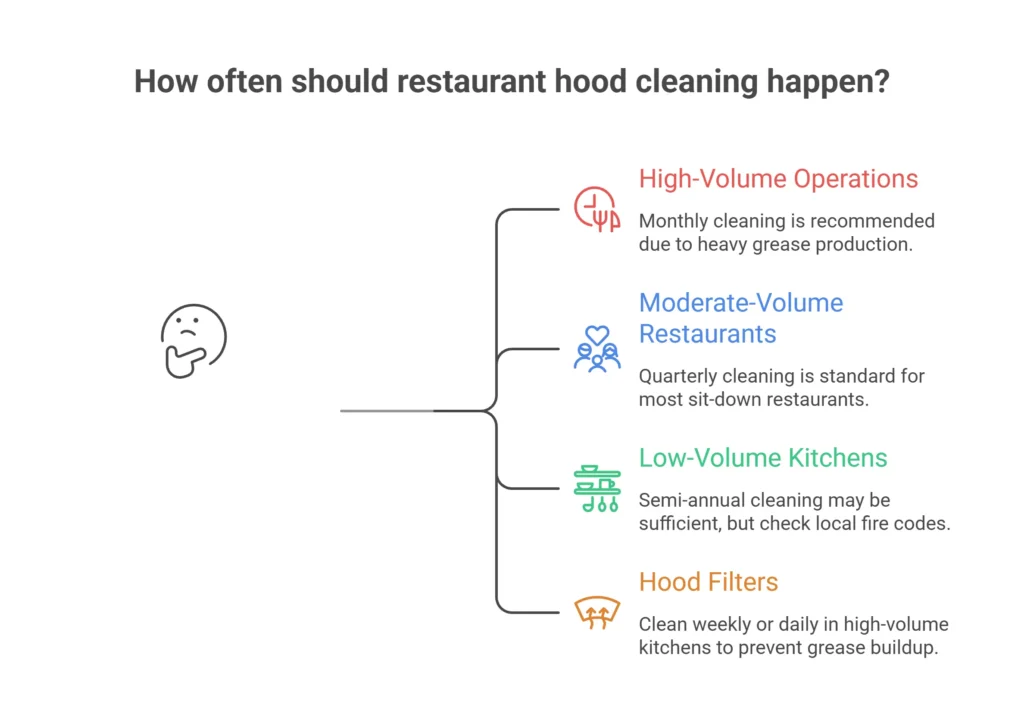
This is one of the most common questions restaurant owners ask, and the answer isn’t one-size-fits-all. Your restaurant exhaust hood cleaning frequency depends on several factors:
- High-Volume Operations (24-hour diners, fast-food chains): Monthly cleaning is typically required. If you’re cooking around the clock with heavy grease production, you can’t afford to wait longer.
- Moderate-Volume Restaurants (full-service restaurants, hotels): Quarterly cleaning is standard. Most sit-down restaurants fall into this category.
- Low-Volume Kitchens (churches, senior centers, seasonal operations): Semi-annual cleaning may be sufficient, but check your local fire codes.
However, your hood filters need attention much more frequently. These should be cleaned weekly or even daily in high-volume kitchens. Think of filters as your first line of defense against grease buildup.
Finding the Right Hood Cleaning Company in New Brunswick
Not every commercial hood cleaners New Brunswick service delivers the same quality. When you’re searching for “restaurant hood cleaning near me,” here are the critical factors to evaluate:
Certification and Training
Your chosen company should be an NFPA 96 certified company with technicians who understand commercial kitchen code compliance. Ask about IKECA certification as well, which demonstrates advanced training in kitchen exhaust cleaning.
Insurance and Documentation
Any legitimate certified hood cleaning services provider carries substantial liability insurance. They should also provide detailed cleaning reports, certificates of performance, and photographic evidence. This documentation is essential for health inspection compliance and insurance purposes.
Cleaning Methods and Equipment
Professional kitchen exhaust cleaning requires industrial-grade equipment. Your service provider should use hot water pressure washing, professional-grade degreasers, and proper containment systems to protect your kitchen from water damage during cleaning.
Local Reputation
A established local hood cleaning services company will have references from other restaurants and food service facilities in New Brunswick. Don’t hesitate to ask for references or check online reviews.
The Connection Between Hood Cleaning and Fire Safety
Let’s talk about something serious for a moment. Grease fire prevention isn’t just about following regulations. It’s about protecting your employees, customers, and livelihood. Kitchen fires spread incredibly fast, and grease fires are particularly dangerous because water won’t extinguish them.
Your kitchen exhaust system cleaning directly impacts your fire risk. When grease accumulates in ductwork, it provides fuel for fires to spread beyond your cooking area and into spaces where your fire suppression system can’t reach. This is why fire code compliant hood cleaning focuses on complete system cleaning, not just visible surfaces.
Restaurant Safety Standards You Can’t Ignore
Commercial kitchen fire safety regulations exist for good reason. Local fire marshals conduct inspections and can shut down operations if they find inadequate cleaning or missing documentation. Beyond the legal requirements, proper exhaust system maintenance protects your:
- Business investment and physical property
- Employees working in the kitchen
- Customers dining in your establishment
- Reputation in the community
- Insurance coverage validity
Regular fire suppression system maintenance ensures your safety equipment functions properly when you need it most.
Beyond Hood Cleaning: Complete Kitchen Maintenance
While we’re focused on restaurant vent hood cleaning, it’s worth mentioning that complete commercial kitchen maintenance involves several related services:
- Grease Trap Cleaning Services: Your floor drains and grease interceptors need regular attention to prevent backups and health code violations.
- Commercial Kitchen Equipment Cleaning: Deep cleaning of ovens, fryers, and other cooking equipment helps maintain food quality and equipment longevity.
- Commercial Kitchen Ventilation Repair: Sometimes cleaning reveals damage that needs professional repair to maintain proper airflow and fire safety.
- Kitchen Fire Suppression Inspection: Your suppression system needs regular testing to ensure it will function during an emergency.
Think of these services as interconnected parts of your overall food service cleaning strategy. A comprehensive approach to hospitality kitchen cleaning protects you on multiple fronts. Consider scheduling commercial kitchen deep cleaning services alongside your hood maintenance for complete protection.
What to Expect During a Professional Cleaning
If you’ve never hired professional hood cleaning services before, here’s what the process typically looks like:
- Pre-Cleaning Preparation: Technicians will protect your cooking equipment and floors with coverings. They’ll assess your system and identify access points for ductwork cleaning.
- Filter Removal and Cleaning: All filters are removed, soaked in degreasing solution, and thoroughly cleaned or replaced if damaged.
- Hood Interior Cleaning: The interior surfaces of the hood are scraped and pressure washed to remove all grease buildup.
- Duct Access and Cleaning: Technicians access your ductwork through the hood and roof, cleaning all interior surfaces with specialized tools and pressure washing equipment.
- Fan and Roof Component Cleaning: The exhaust fan, housing, and rooftop components are cleaned and inspected.
- Final Inspection and Documentation: After cleaning, you’ll receive a certificate of performance with photos documenting the work completed.
The entire process typically takes 2-4 hours depending on your system size and the amount of buildup present. Most restaurants schedule this during off-hours to avoid disrupting operations.
Making the Investment in Professional Services
Here’s the bottom line: commercial kitchen exhaust cleaning isn’t an expense, it’s an investment. The cost of professional hood and duct cleaning is minimal compared to the potential losses from a grease fire, insurance claim denial, or health department shutdown.
When searching for the best hood cleaning service, don’t make your decision based solely on price. The cheapest option often cuts corners that compromise your safety and compliance. Instead, focus on value: certified technicians, comprehensive cleaning, proper documentation, and peace of mind.
Choose AA Cleaning Solutions for NFPA 96 Certified Hood Cleaning
Your commercial kitchen is the heart of your food service operation. Protecting it with regular, certified exhaust hood cleaning services isn’t optional—it’s essential. Whether you operate a bustling restaurant, a hotel kitchen, or any other food service facility in New Brunswick, partnering with an NFPA 96 certified hood cleaning company is one of the smartest decisions you can make.
AA Cleaning Solutions provides comprehensive, NFPA 96 certified hood cleaning services throughout New Brunswick with a commitment to safety, compliance, and exceptional service. Our trained technicians use state-of-the-art equipment and follow strict protocols to ensure your kitchen exhaust system is thoroughly cleaned and properly documented.
Don’t wait until your next health inspection or, worse, until a fire incident forces your hand. Schedule your restaurant kitchen cleaning assessment today. Our team can evaluate your current system, recommend an appropriate cleaning schedule, and provide the documentation you need for complete health code compliance cleaning.
Contact AA Cleaning Solutions today to protect your business with professional hood cleaning services. Learn more about our company and our commitment to commercial kitchen safety, or explore our blog for additional resources on maintaining a safe, compliant commercial kitchen.
Remember, when it comes to commercial kitchen maintenance and fire safety, proactive prevention beats reactive damage control every single time. Your business, your employees, and your customers deserve the protection that professional, certified hood cleaning provides.
Frequently Asked Questions
Hood filters need much more frequent cleaning than the exhaust system itself. High-volume restaurants should clean filters daily or weekly, while moderate-volume operations can maintain weekly or bi-weekly cleaning. Clean filters are your first defense against grease entering ducts, reducing fire risk significantly.
Professional technicians should hold NFPA 96 certification, demonstrating knowledge of ventilation control and fire protection standards. Many top companies also require IKECA (International Kitchen Exhaust Cleaning Association) certification for advanced training. Technicians should also be trained in pressure washing equipment, chemical safety, and commercial kitchen code compliance.
Yes, reputable services provider like aacleaning solutions provides comprehensive documentation including certificates of performance, before/after photographs, detailed service reports, and certification stickers. This documentation is critical for health inspections, fire marshal visits, and insurance purposes. Keep records for at least three years as proof of regular maintenance.
Hood cleaning focuses on visible exhaust hoods, filters, and accessible areas above cooking equipment. Duct cleaning addresses the entire ductwork system from hood to exhaust fan, including horizontal runs, vertical stacks, and rooftop components. Complete exhaust system cleaning requires both to effectively remove grease buildup and prevent fire hazards.
Costs vary based on system size, accessibility, grease buildup, and cleaning frequency. Small restaurant systems typically range from $300-$500 per cleaning, while larger hotel or institutional kitchens cost $800-$1,500 or more. Regular scheduled maintenance costs less than emergency cleanings, and many companies offer discounted service contracts.