

Running a restaurant in Nova Scotia’s competitive food service industry is like conducting an orchestra – every element must work in perfect harmony. But there’s one critical component that many restaurant owners from Halifax to Sydney overlook until it’s too late: professional hood cleaning services. If you’ve ever wondered why some Nova Scotia restaurants seem to effortlessly pass health inspections while others struggle, the answer often lies in their approach to commercial kitchen hood cleaning.
Picture this: It’s Friday night during tourist season, your restaurant in downtown Halifax is packed, and suddenly the fire department shows up for an unannounced inspection. Your heart sinks as they point to grease buildup in your exhaust system. This scenario isn’t just a nightmare – it’s a reality that hundreds of Nova Scotia restaurant owners face every year. The good news? It’s entirely preventable with proper NFPA 96 certified cleaning from qualified hood cleaning services Nova Scotia providers.
In this comprehensive guide, we’ll explore everything you need to know about restaurant hood cleaning in Nova Scotia, why certification matters, and how investing in the right services can save your business from costly shutdowns, fines, and even catastrophic fires across all communities from Yarmouth to Sydney.
Understanding NFPA 96: The Gold Standard for Kitchen Safety in Nova Scotia
What is NFPA 96 certification for hood cleaning? This question tops the list of inquiries from restaurant owners across Nova Scotia, and for good reason. The National Fire Protection Association (NFPA) 96 standard isn’t just another bureaucratic requirement – it’s a comprehensive safety protocol that has prevented countless kitchen fires and saved lives in restaurants from Truro to Bridgewater.
NFPA 96 establishes the minimum fire safety requirements for commercial kitchen ventilation systems. Think of it as the rulebook that governs how your kitchen exhaust system maintenance should be performed, whether you’re operating a seafood restaurant in Liverpool or a farm-to-table establishment in Wolfville. This standard covers everything from the design and installation of ventilation systems to their ongoing maintenance and cleaning requirements.
Why is NFPA 96 compliance important for restaurants? The statistics speak volumes. According to the National Fire Protection Association, cooking equipment is involved in 61% of restaurant fires, with failure to clean being a factor in 22% of these incidents. When your exhaust hood maintenance follows NFPA 96 standards, you’re not just checking a compliance box – you’re creating a protective barrier between your Nova Scotia business and disaster.
The certification process involves rigorous training for cleaning technicians, ensuring they understand the intricacies of commercial cooking equipment maintenance and grease removal services. Certified professionals serving Nova Scotia communities know exactly how to access every nook and cranny of your ventilation system, removing the grease buildup that could fuel a fire.
The Hidden Dangers of Neglected Hood Systems in Nova Scotia’s Climate
Let’s talk about what happens when you skip regular restaurant hood cleaning in Nova Scotia’s unique climate conditions. The province’s high humidity levels, especially in coastal communities like Halifax, Dartmouth, and Shelburne, can accelerate grease accumulation and create additional challenges for commercial kitchen ventilation systems.
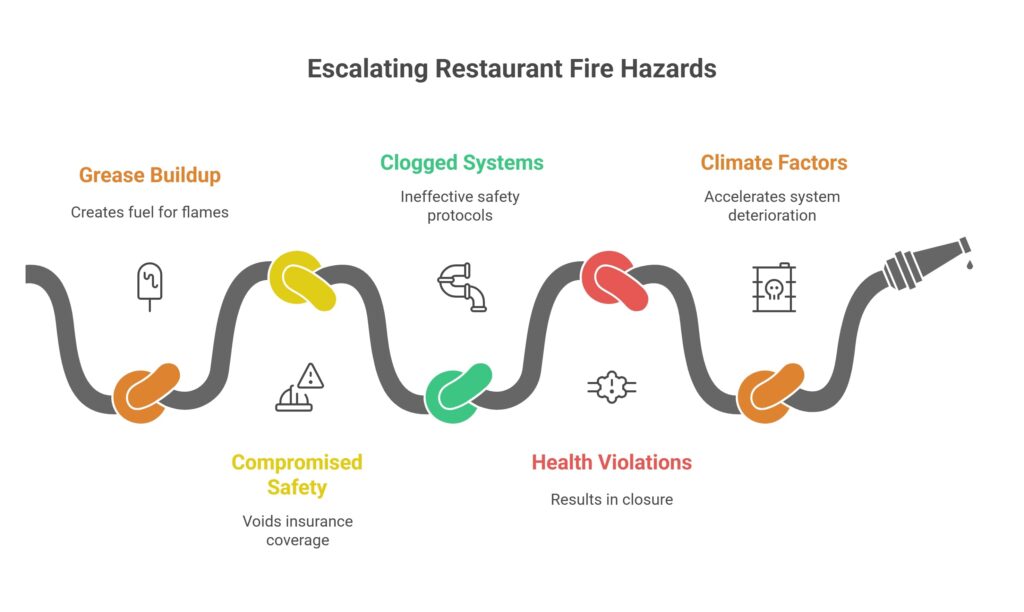
What happens if you don’t clean restaurant hoods regularly? The consequences extend far beyond failed inspections, particularly in Nova Scotia’s regulatory environment:
- Fire hazards multiply exponentially as grease buildup creates fuel for flames
- Kitchen fire hazards increase dramatically, putting staff and customers at risk
- Restaurant fire safety becomes compromised, potentially voiding insurance coverage
- Commercial kitchen safety protocols become ineffective when systems are clogged
- Health department violations can result in temporary or permanent closure
- Maritime climate factors can accelerate corrosion and system deterioration
Consider the case of a popular seafood restaurant in Sydney that postponed their scheduled cleaning to save money during a slow winter season. Three months later, a small grease fire in their kitchen spread through the contaminated ductwork, causing $200,000 in damage and forcing a six-month closure during peak tourist season. The cost of proper professional exhaust hood cleaning services Nova Scotia would have been less than $1,000.
Breaking Down Professional Hood Cleaning Services Across Nova Scotia
What is included in professional hood cleaning services? A comprehensive cleaning goes far beyond what most restaurant staff can accomplish during regular maintenance. Professional services across Nova Scotia communities encompass:
Complete System Assessment
Before any cleaning begins, certified technicians conduct a thorough kitchen hood inspection. Whether you’re in Bedford, New Glasgow, or Kentville, they examine every component of your ventilation system, from the hood canopy to the exhaust fan, identifying areas of concern and documenting the current condition.
Deep Grease Removal
Grease removal services involve more than wiping down visible surfaces. Professional cleaners use specialized equipment and cleaning agents to dissolve years of accumulated grease from ductwork, fans, and filters. This process often reveals components that haven’t been properly cleaned in years, particularly important in Nova Scotia’s coastal climate.
Fire Suppression System Maintenance
Many restaurant owners across Nova Scotia don’t realize that fire suppression system cleaning is interconnected with hood cleaning. Grease buildup can interfere with suppression nozzles, rendering your fire protection system ineffective when you need it most.
Documentation and Compliance
Professional services provide detailed documentation of their work, including before-and-after photos and compliance certificates. This paperwork is crucial for insurance claims, health department inspections, and demonstrating due diligence in restaurant fire safety across all Nova Scotia jurisdictions.
The Economics of Professional Hood Cleaning in Nova Scotia
How much does professional hood cleaning cost? This question deserves a nuanced answer because the cost varies significantly across Nova Scotia communities based on several factors:
- System size and complexity – Larger restaurants in Halifax or Sydney require more extensive cleaning
- Cleaning frequency – More frequent cleanings are typically less expensive per visit
- Current condition – Heavily neglected systems require additional time and materials
- Geographic location – Urban centers like Halifax may have higher service costs than rural communities like Windsor or Amherst
- Seasonal accessibility – Winter conditions may affect service costs in some Nova Scotia regions
However, let’s put this in perspective for Nova Scotia restaurant owners. The average commercial kitchen cleaning service costs between $400-$900 per cleaning, depending on these factors. Compare this to the potential costs of neglect:
- Fire damage restoration: $50,000-$500,000+
- Business interruption losses: $10,000-$100,000+ per month of closure (devastating during tourist season)
- Insurance premium increases: 20-50% after a preventable fire
- Legal liability: Potentially unlimited if injuries occur
When viewed through this lens, professional hood cleaning services aren’t an expense – they’re insurance against catastrophic loss for your Nova Scotia business.
Frequency Requirements: How Often Should Nova Scotia Restaurants Clean?
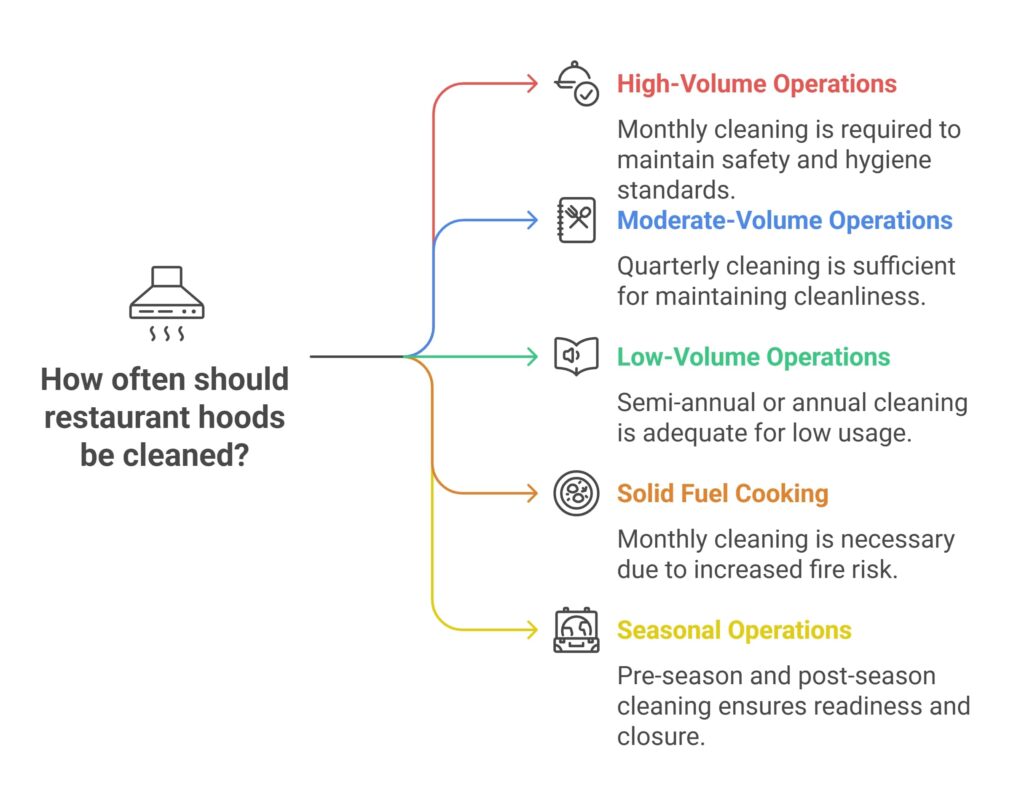
How often should restaurant hoods be cleaned? The answer depends on your cooking volume and methods, but NFPA 96 provides clear guidelines that apply across all Nova Scotia communities:
- High-volume operations (busy Halifax waterfront restaurants, 24-hour establishments): Monthly cleaning
- Moderate-volume operations (most full-service restaurants in Dartmouth, Truro, Antigonish): Quarterly cleaning
- Low-volume operations (community centers in Wolfville, senior centers in Bridgewater): Semi-annually or annually
- Solid fuel cooking (wood-fired pizza places, charcoal grills): Monthly cleaning regardless of volume
- Seasonal operations (tourist-focused restaurants in Yarmouth, Port Hawkesbury): Pre-season and post-season cleaning
These aren’t arbitrary recommendations. They’re based on decades of fire investigation data and scientific analysis of grease accumulation rates. Restaurant kitchen hood cleaning requirements exist because they work across all climates and operating conditions.
Many successful restaurant chains operating across Nova Scotia have discovered that slightly increasing their cleaning frequency actually reduces overall costs. More frequent cleanings prevent heavy buildup, making each service faster and less expensive while maintaining optimal commercial kitchen fire safety compliance.
Choosing the Right Hood Cleaning Company in Nova Scotia
Who can perform NFPA 96 certified hood cleaning? Not all cleaning companies are created equal. When searching for hood cleaning services Halifax, Sydney hood cleaning, or services in any Nova Scotia community, look for these essential qualifications:
Proper Certification and Training
Verify that technicians hold current NFPA 96 certifications. This isn’t just a piece of paper – it represents hundreds of hours of training in kitchen exhaust cleaning services and fire safety protocols.
Provincial Licensing and Insurance
Licensed hood cleaning contractors Nova Scotia should carry comprehensive liability insurance and be bonded. This protects your business if accidents occur during cleaning. Verify they’re registered to operate in Nova Scotia and understand local regulations.
Local Reputation and References
Search for “hood cleaning services near me” but don’t stop at proximity. Check reviews from other Nova Scotia restaurants, ask for references in communities like Lower Sackville, Middle Sackville, or Upper Sackville, and verify their track record with local establishments.
Comprehensive Service Offerings
The best companies provide more than just cleaning. Look for providers who offer kitchen exhaust system repair, restaurant equipment servicing, and can serve as your restaurant safety consultants across Nova Scotia.
Emergency Services
Emergency hood cleaning services can be crucial if you discover problems between scheduled cleanings or need to address inspection findings quickly. This is particularly important for restaurants in tourist areas that can’t afford unexpected closures during peak season.
Regional Considerations for Nova Scotia Communities
Different Nova Scotia regions present unique challenges and opportunities for commercial kitchen maintenance:
Halifax Regional Municipality
Hood cleaning services Halifax must navigate urban density, parking restrictions, and higher service demand. However, the concentration of restaurants creates competitive pricing and specialized expertise.
Cape Breton (Sydney Area)
Sydney commercial kitchen cleaning services must account for the region’s industrial heritage and unique building structures. Many older buildings require specialized access solutions.
South Shore Communities
Restaurants in Bridgewater, Liverpool, and Shelburne often operate seasonally, requiring flexible restaurant hood cleaning schedules that align with tourist seasons.
Annapolis Valley
Kentville restaurant cleaning services and providers serving Wolfville and Windsor must understand the agricultural community’s unique needs, including wineries and farm-to-table operations.
Northern Nova Scotia
Truro hood cleaning and services in Amherst must account for longer travel distances and may offer route-based scheduling to optimize costs.
Tri-County Area
Yarmouth commercial kitchen cleaning services often coordinate with New Brunswick providers to optimize service routes and reduce costs for restaurant owners.
The Technology Behind Modern Hood Cleaning in Nova Scotia
Today’s commercial kitchen maintenance has evolved significantly from the days of simple scraping and hosing. Modern professional hood cleaning services across Nova Scotia employ advanced techniques and equipment:
Cold-Weather Adaptations
Nova Scotia’s climate requires specialized equipment that can operate effectively in cold conditions, particularly important for exterior exhaust fan cleaning during winter months.
Pressure Washing Systems
High-pressure, hot water systems can reach temperatures exceeding 200°F, effectively dissolving even the most stubborn grease deposits while sanitizing surfaces, crucial in Nova Scotia’s humid coastal climate.
Eco-Friendly Degreasers
Modern cleaning agents are both more effective and environmentally responsible than traditional solvents, ensuring grease buildup prevention without harmful residues – particularly important given Nova Scotia’s environmental consciousness.
Access Panel Installation
Professional companies often install permanent access panels in ductwork, making future cleanings more thorough and cost-effective, especially valuable in older Nova Scotia buildings.
Digital Documentation
Many services now provide digital reports with timestamped photos, making it easier to track your commercial kitchen compliance over time and satisfy multiple jurisdictional requirements across Nova Scotia.
Industry-Specific Considerations Across Nova Scotia
Different types of food service operations have unique hood cleaning requirements:
Seafood Restaurants
Nova Scotia’s abundant seafood restaurants, particularly in coastal communities like Halifax, Dartmouth, and Shelburne, require specialized cleaning protocols due to the unique grease and particulate characteristics of seafood cooking.
Tourism-Focused Establishments
Restaurants in tourist destinations like Antigonish, Port Hawkesbury, and Wolfville need flexible scheduling that accommodates peak season operations while ensuring compliance year-round.
Franchise Operations
Chain restaurant cleaning services operating across multiple Nova Scotia locations benefit from standardized protocols and volume discounts, but require providers who can maintain consistency from Halifax to Sydney.
Agricultural Community Restaurants
Farm-to-table restaurants and agricultural community establishments in areas like the Annapolis Valley require providers who understand unique cooking methods and seasonal variations.
Seasonal Maintenance and Planning in Nova Scotia
Smart Nova Scotia restaurant owners plan their kitchen ventilation cleaning around both business cycles and regional climate patterns. Annual kitchen maintenance should be scheduled during slower periods when possible, but Nova Scotia’s distinct seasons create unique planning opportunities:
Spring Preparation
Pre-tourist season cleaning ensures systems are optimized for high-volume summer operations across coastal communities.
Summer Maintenance
Peak season requires careful scheduling to minimize business disruption, particularly crucial for tourism-dependent restaurants.
Fall Deep Cleaning
Post-tourist season provides opportunities for comprehensive system overhauls and major maintenance projects.
Winter Planning
Year-end restaurant maintenance is particularly important for tax planning, as cleaning expenses are fully deductible business expenses. Many Nova Scotia operators schedule major cleanings in December to maximize their current-year deductions.
Working with Local Authorities and Inspectors
Nova Scotia restaurant owners must navigate various regulatory authorities:
Municipal Fire Departments
Each community from Halifax to Sydney has specific requirements and inspection protocols. Building relationships with local restaurant safety consultants who understand these variations is crucial.
Provincial Health Inspectors
Food service cleaning compliance requirements may vary slightly across Nova Scotia’s health zones, making local expertise valuable.
Insurance Requirements
Nova Scotia insurance companies increasingly require documented fire prevention services and may offer premium discounts for restaurants maintaining proper cleaning schedules.
The Future of Hood Cleaning Services in Nova Scotia
The industry continues to evolve with new technologies and methods, with Nova Scotia providers adapting to local needs:
Smart Monitoring Systems
IoT sensors for real-time grease monitoring are being piloted in Halifax restaurants, with potential expansion across the province.
Environmental Initiatives
Nova Scotia’s commitment to environmental sustainability is driving adoption of green cleaning methods and waste reduction practices.
Regional Coordination
Improved coordination between service providers is creating more efficient routes and better service availability across rural Nova Scotia communities.
Making the Investment Decision for Your Nova Scotia Restaurant
When evaluating affordable restaurant cleaning options across Nova Scotia, remember that the cheapest option is rarely the most economical in the long run. Fire prevention services are an investment in your business’s future, not just an operational expense.
Consider partnering with hospitality cleaning services that understand the unique challenges of Nova Scotia’s food service operations, from Halifax’s urban density to Yarmouth’s seasonal fluctuations. The best providers become true partners, helping you maintain not just compliance but optimal operational efficiency.
Food service cleaning compliance is becoming increasingly complex, with new regulations and standards emerging regularly. Having expert partners who stay current with these changes and understand Nova Scotia’s specific requirements is invaluable.
Conclusion: Protecting Your Nova Scotia Restaurant Investment
Your Nova Scotia restaurant represents more than just a business – it’s your dream, your investment, and your contribution to the province’s vibrant culinary scene. Professional hood cleaning services with NFPA 96 certified cleaning aren’t just about meeting regulations; they’re about protecting everything you’ve worked to build, whether you’re serving lobster rolls in Halifax or craft beer in Wolfville.
The question isn’t whether you can afford professional cleaning services – it’s whether you can afford not to have them. Every day you operate with inadequate exhaust hood maintenance is another day you’re gambling with fire, literally and figuratively, risking not just your investment but Nova Scotia’s reputation as a premier dining destination.
Don’t wait for a close call or a failed inspection to take action. For Nova Scotia restaurant owners seeking trusted, NFPA 96 certified cleaning services, AA Cleaning Solutions provides comprehensive commercial kitchen cleaning services across the province. Their certified technicians understand the unique challenges of Nova Scotia’s maritime climate and diverse restaurant operations, from busy Halifax establishments to seasonal coastal restaurants.
Ready to protect your Nova Scotia restaurant with professional hood cleaning services? Contact AA Cleaning Solutions today to schedule your comprehensive system evaluation and join the growing number of Nova Scotia restaurants that prioritize fire safety and compliance. Your business, your staff, and your customers deserve the peace of mind that comes with proper commercial kitchen fire safety compliance from experienced local professionals who understand your community’s specific needs.
Frequently Asked Questions (FAQs)
NFPA 96 certification ensures that hood cleaning technicians are trained according to the National Fire Protection Association’s standards for ventilation control and fire protection of commercial cooking operations. This certification is crucial for Nova Scotia restaurants because it guarantees that cleaning services meet the highest safety standards, reducing fire risks and ensuring compliance with local fire codes across all communities from Halifax to Yarmouth. Certified technicians understand the complex requirements of commercial kitchen exhaust systems and can properly maintain fire suppression systems during cleaning, which is particularly important given Nova Scotia’s diverse restaurant types and climatic conditions.
The frequency depends on your cooking volume, methods, and seasonal operations common in Nova Scotia. High-volume operations like busy Halifax waterfront restaurants need monthly cleaning, while moderate-volume restaurants in communities like Dartmouth, Truro, or Antigonish typically require quarterly service. Seasonal operations common in tourist areas like Yarmouth or Port Hawkesbury should schedule pre-season and post-season cleanings. Restaurants using solid fuel (wood, charcoal) require monthly cleaning regardless of volume. Following these NFPA 96 guidelines helps prevent grease buildup and maintains optimal fire safety across Nova Scotia’s diverse climate conditions.
When selecting hood cleaning services across Nova Scotia communities, verify that technicians hold current NFPA 96 certifications and are properly licensed to operate in the province. Look for companies with comprehensive liability insurance, strong local references from other Nova Scotia restaurants, and experience with your specific type of operation (seafood restaurants, seasonal establishments, etc.). The best providers offer emergency services, understand regional regulations from Halifax to Sydney, and can provide additional services like kitchen exhaust system repair and restaurant safety consulting tailored to Nova Scotia’s unique requirements.
Costs typically range from $400-$900 per cleaning across Nova Scotia, depending on system size, complexity, current condition, and location. Urban centers like Halifax may have slightly higher costs than rural communities like Windsor or Amherst, while seasonal accessibility in some regions may affect pricing. However, this investment is minimal compared to potential fire damage costs ($50,000-$500,000+), business interruption losses during peak tourist season, and insurance premium increases. Many Nova Scotia restaurants find that slightly more frequent cleanings actually reduce per-visit costs while maintaining better compliance and safety standards.
Nova Scotia’s maritime climate presents unique challenges including high humidity levels that can accelerate grease accumulation, especially in coastal communities like Halifax, Dartmouth, and Shelburne. Salt air can increase corrosion risks for exhaust systems, while winter conditions may affect exterior cleaning and access. Professional services must use equipment adapted for cold-weather operations and understand how coastal conditions affect ventilation systems. Additionally, many Nova Scotia restaurants operate seasonally, requiring flexible scheduling that accommodates both peak tourist seasons and off-season maintenance windows while ensuring year-round compliance with fire safety standards.